|
"When you are courting a nice girl, an hour seems like a second. When you sit on a red-hot cinder, a second seems like an hour. That's relativity."
— Albert Einstein
“What is it with science these days? Everyone is so quick to believe in it, in all these new scientific discoveries, new pills for this, new pills for that. Get thinner, grow hair, yada, yada, yada, but when it requires a little faith in something you all go crazy.' He shook his head, 'If miracles had chemical equations then everyone would believe.”
― Cecelia Ahern, The Gift
CLICK ON BLOG to see the entries!
CLICK ON ABOUT to know me further!
CLICK ON ARCHIVES to see my list!
CHECK WHO'S ONLINE ON CHAT!
|
|
|
Sunday, July 18, 2010
HOMEOSTASIS: INTRO
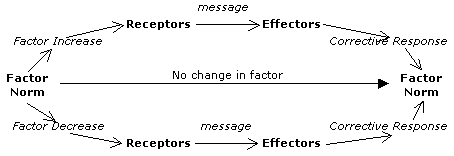
homeostasis is the property of a system, either open or closed, that regulates its internal environment and tends to maintain a stable, constant condition - Claude Bernard It is the process by which the body adjusts its functions to compensate for deficiency. Homeostasis, in conclusion, is the physiology process of every living organism which keep the its internal environment in constant condition. The relatively stable conditions of the internal environment is result from the a physiology mechanism called NEGATIVE FEEDBACK CONTROL.  THis diagram shows NEGATIVE FEEDBACK CONTROL, or in this scenario it goes like this - The level of glucose in the bloodstream drops. The bodies requires glucose in cells to meet the demand for ATP (Adenosine TriPhosphate). - The body detects this with a particular receptor designed for this function. - These receptors release hormones ( the chemical message that initiate the start of the feedback mechanism) - The hormones travel to their target and intiate a corrective response, in this case the target is the secretion of more glucose into the bloodstream. Labels: biology, constant, homeostasis, hormones, internal, intro, negative feedback control, physiology
|
|
|
Wednesday, July 7, 2010
a speech about genetic engineering
As a smart human being, i recommend you to start giving attention to genetic engineering. Gentic engineering, the moment of scientist manipulating one's DNA to create another better organism with the desired and better traits with the advancement become potentially able to enhance our living. Genetic engineering, the alteration and manipulation of gentic code by artificial means has brought many controversies of ethics. Yet because it is novel and different from traditional selective breeding, it requires much more advancement so it can be lead our pursuit of science comes true. Genetic engineering is potentially minimizing and perhaps ultimately curing infectious and incurable disease. By implanting the specific genes that have been engineered uniquely designed to eliminate and target correlating gene, it can cure cancer.With genetic engineering, it is also easier for human to get better health. Genetic engineering in food can be used to produce new substances and other food nutrients therefore the genetic modification of foods can increase their medicinal value, greater taste, and yet can survive in harsh condition during planting. Thus making available homegrown vaccines in an efficiently cost. But this new biotechnology invention in its infancy still leave us high and dry with the unanswered questions that mostly correlate to problems with genetic engineering: - Will genetic engineering result in genetic discrimination between those who have been modified and those who have not?- Will our natural resources and the economics of world be able to sustain an ever-growing population with an extended life expectancy?- What are the long consequences?and yet the most common is always asking about the ethic and moral like, - Morally and ethically, do scientist have the right to maipulate nature?With the advancement to despite these very importance concerns our pursuit of science is likely to progress and continue. My hope for this particular time is genetic engineering will be more responsible, objective, morally grounded, and in humanity's best interest. Labels: biology, biotechnology, ethics, genetic, genetic engineering, moral, pros and cons, social science, speech, technology
|
|
|
Sunday, June 27, 2010
ROCK YOUR BODY: 17 TRICKS OF YOUR AMAZING BODY!
1. If your throat tickles, scratch your ear. When you were 9, playing your armpit was a cool trick. Now, as an adult, you can still appreciate a good body-based feat, but you’re more discriminating. Take that tickle in your throat; it’s not worth gagging over. Here’s a better way to scratch your itch: “When the nerves in the ear are stimulated, it creates a reflex in the throat that can cause a muscle spasm,” says Scott Schaffer, M.D., president of an ear, nose and throat specialty center in Gibbsboro, New Jersey. “This spasm relieves the tickle.” 2. Experience supersonic hearing! If you’re stuck chatting up a mumbler at a cocktail party, lean in with your right ear. It’s better than your left at following the rapid rhythms of speech, according to researchers at the UCLA David Geffen School of Medicine. If, on the other hand, you’re trying to identify that song playing softly in the elevator, turn your left ear toward the sound. The left ear is better at picking up music tones. 3. Feel no pain! German researchers have discovered that coughing during an injection can lessen the pain of the needle stick. According to Taras Usichenko, author of a study on the phenomenon, the trick causes a sudden, temporary rise in pressure in the chest and spinal canal, inhibiting the pain-conducting structures of the spinal cord. 4. Clear your stuffed nose! Forget Sudafed. An easier, quicker, and cheaper way to relieve sinus pressure is by alternately thrusting your tongue against the roof of your mouth, then pressing between your eyebrows with one finger. This causes the vomer bone, which runs through the nasal passages to the mouth, to rock back and forth, says Lisa DeStefano, D.O., an assistant professor at the Michigan State University college of osteopathic medicine. The motion loosens congestion; after 20 seconds, you’ll feel your sinuses start to drain. 5. Fight fire without water! Worried those wings will repeat on you tonight? “Sleep on your left side,” says Anthony A. Star-poli, M.D., a New York City gastroenterologist and assistant professor of medicine at New York Medical College. Studies have shown that patients who sleep on their left sides are less likely to suffer from acid reflux. The esophagus and stomach connect at an angle. When you sleep on your right, the stomach is higher than the esophagus, allowing food and stomach acid to slide up your throat. When you’re on your left, the stomach is lower than the esophagus, so gravity’s in your favor. 6. Cure your toothache without opening your mouth! Just rub ice on the back of your hand, on the V-shaped webbed area between your thumb and index finger. A Canadian study found that this technique reduces toothache pain by as much as 50 percent compared with using no ice. The nerve pathways at the base of that V stimulate an area of the brain that blocks pain signals from the face and hands. 7. Make burns disappear! When you accidentally singe your finger on the stove, clean the skin and apply light pressure with the finger pads of your unmarred hand. Ice will relieve your pain more quickly, Dr. DeStefano says, but since the natural method brings the burned skin back to a normal temperature, the skin is less likely to blister. 8. Stop the world from spinning! One too many drinks left you dizzy? Put your hand on something stable. The part of your ear responsible for balance—the cupula—floats in a fluid of the same density as blood. “As alcohol dilutes blood in the cupula, the cupula becomes less dense and rises,” says Dr. Schaffer. This confuses your brain. The tactile input from a stable object gives the brain a second opinion, and you feel more in balance. Because the nerves in the hand are so sensitive, this works better than the conventional foot-on-the-floor wisdom. 9. Unstitch your side! If you’re like most people, when you run, you exhale as your right foot hits the ground. This puts downward pressure on your liver (which lives on your right side), which then tugs at the diaphragm and creates a side stitch, according to The Doctors Book of Home Remedies for Men. The fix: Exhale as your left foot strikes the ground. 10. Stanch blood with a single finger! Pinching your nose and leaning back is a great way to stop a nosebleed—if you don’t mind choking on your own O positive. A more civil approach: Put some cotton on your upper gums—just behind that small dent below your nose—and press against it, hard. “Most bleeds come from the front of the septum, the cartilage wall that divides the nose,” says Peter Desmarais, M.D., an ear, nose, and throat specialist at Entabeni Hospital, in Durban, South Africa. “Pressing here helps stop them.” 11. Make your heart stand still! Trying to quell first-date jitters? Blow on your thumb. The vagus nerve, which governs heart rate, can be controlled through breathing, says Ben Abo, an emergency medical-services specialist at the University of Pittsburgh. It’ll get your heart rate back to normal. 12. Thaw your brain! Too much Chipwich too fast will freeze the brains of lesser men. As for you, press your tongue flat against the roof of your mouth, covering as much as you can. “Since the nerves in the roof of your mouth get extremely cold, your body thinks your brain is freezing, too,” says Abo. “In compensating, it overheats, causing an ice-cream headache.” The more pressure you apply to the roof of your mouth, the faster your headache will subside. 13. Prevent near-sightedness! Poor distance vision is rarely caused by genetics, says Anne Barber, O.D., an optometrist in Tacoma, Washington. “It’s usually caused by near-point stress.” In other words, staring at your computer screen for too long. So flex your way to 20/20 vision. Every few hours during the day, close your eyes, tense your body, take a deep breath, and, after a few seconds, release your breath and muscles at the same time. Tightening and releasing muscles such as the biceps and glutes can trick involuntary muscles—like the eyes—into relaxing as well. 14. Wake the dead! If your hand falls asleep while you’re driving or sitting in an odd position, rock your head from side to side. It’ll painlessly banish your pins and needles in less than a minute, says Dr. DeStefano. A tingly hand or arm is often the result of compression in the bundle of nerves in your neck; loosening your neck muscles releases the pressure. Compressed nerves lower in the body govern the feet, so don’t let your sleeping dogs lie. Stand up and walk around. 15. Impress your friends! Next time you’re at a party, try this trick: Have a person hold one arm straight out to the side, palm down, and instruct him to maintain this position. Then place two fingers on his wrist and push down. He’ll resist. Now have him put one foot on a surface that’s a half inch higher (a few magazines) and repeat. This time his arm will fold like a house of cards. By misaligning his hips, you’ve offset his spine, says Rachel Cosgrove, C.S.C.S., co-owner of Results Fitness, in Santa Clarita, California. Your brain senses that the spine is vulnerable, so it shuts down the body’s ability to resist. 16. Breathe underwater! If you’re dying to retrieve that quarter from the bottom of the pool, take several short breaths first—essentially, hyperventilate. When you’re underwater, it’s not a lack of oxygen that makes you desperate for a breath; it’s the buildup of carbon dioxide, which makes your blood acidic, which signals your brain that somethin’ ain’t right. “When you hyperventilate, the influx of oxygen lowers blood acidity,” says Jonathan Armbruster, Ph.D., an associate professor of biology at Auburn University. “This tricks your brain into thinking it has more oxygen.” It’ll buy you up to 10 seconds. 17. Read minds! Your own! “If you’re giving a speech the next day, review it before falling asleep,” says Candi Heimgartner, an instructor of biological sciences at the University of Idaho. Since most memory consolidation happens during sleep, anything you read right before bed is more likely to be encoded as long-term memory. Source:- rockforhealth AMAZED?! Labels: amazing, biology, body, health, physiology, reaction, research, tricks
|
|
|
Friday, June 25, 2010
DNA EXTRACTION
This is DNA extraction of papaya's fruit DNA. The picture may not seem clear because of the light reflection and the alcohol is not enough. The deficiency of alcohol makes the DNA didn't separate enough from the solution creates the bad visibility of the white strands.  tip: use ethanol or alcohol isopropyl to create clear image Labels: biology, chemical, DNA, experiment, papaya, photo
|
|
|
DNA EXTRACTION PROJECT
This is my latest project of DNA extraction. Here i provide you the abstract of the project. PROJECT #1 ABSTRACT: DNA EXTRACTION BACKGROUND & OBJECTIVE In this era, DNA is very common topic discussion and it is eminent as the secret of life. It is responsible to duplicate genetic information of every generation to another. DNA extraction is the basic introduction of observing DNA. This is the first skill of scientist to know DNA further by removing DNA from its cell. QUESTIONS How does soap play role in DNA extraction? HYPOTHESIS Soap, as a base chemical can removes lipids in cell membrane. The more soap is used, the more DNA is visible. OBJECTIVES The objective of this experiment is to know further every roles of experiment’s equipment, in this case is the purpose of soap. METHODS MATERIALS Teaspoon (1) Clear drinking glass (1) Egg (1) Cold alcohol (100 ml) Plastic bag (1) Coffee filter (1) 3 teaspoon of shower soap PROCEDURES STEPS OF EXPERIMENT #A Beat the egg and scramble it in the clear drinking glass using tea spoon. When it mixed well, add a teaspoon of shower soap. Then mix the solution well. Pour 100 ml of alcohol isopropyl into the glass. Wait until white strands come up and float in the alcohol. STEPS OF EXPERIMENT #B Beat the egg and scramble it in the clear drinking glass using tea spoon. When it mixed well, add two teaspoons of shower soap. Then mix the solution well. Pour 100 ml of alcohol isopropyl into the glass. Wait until white strands come up and float in the alcohol. RESULT The white strands of egg’s DNA will float in the alcohol. Based on the experiments, experiment #B has shown more white strands of DNA than experiment #A. This is because soap, as a base chemical can removes lipids in cell membrane. The more soap is used, the more DNA is visible. Thus the more cells are losing its membrane; the more DNA strands are able to dissolve in alcohol isopropyl from its nucleus. CONCLUSION This experiment was conducted to observe the purpose of soap (base) in DNA extraction. DNA extraction is a very common experiment because it is the basic step of DNA’s voyage. Soap as a base chemical, holds an important role in rupturing DNA from the cell by removes the lipid in cell membranes. SUMMARY STATEMENT My project has shown the importance of base chemical in this experiment. A base chemical is able to remove the cell membrane’s lipid. BIBLIOGRAPHY http://apps.caes.uga.edu http://www.youtube.com/watch?v=HgUgAeAb4Ng 06/25/2010 Labels: base, biology, cell, chemical, DNA, egg, experiment, genetic, lipid, membrane, project, purpose, role, soap
|
|
|
Wednesday, June 23, 2010
THE BASIC STRUCTURE OF DNA
 DNA, DeoxyriboNucleicAcid is part of our definition of a living organism. It was first isolated by Friedrich Miescher in 1863 and was observed further by James Watson and Francis Crick who eventually figured out the the DNA'S double helix structure in 1953. This double helix matter can be likened to a twisted ladder which are made of bases. The bases are Adenine (A), Thymine (T), Guaninne (G), and Cytosine (C). In DNA, A always paied with T while G always paired with C or, A+T=G+C. Those bases are sticked by hydrogen. The DNA ladder's sides are made of sugars and phosphate atoms. When the sugar phosphate are attached to the bases, it is called as an nucleotide. sugar+phosphate+bases= nucleotide. There are many conformations of DNA A-DNA, B-DNA, or Z-DNA, but they all likely twists to the right. All of our cells have DNA except red blood cells. DNA holds an important role to living organism identification. That's why DNA is called as THE BLUEPRINT OF LIFE  Watson and Crick Labels: biology, DNA, genetic, history
|
|
|
Friday, May 14, 2010
CHROMOSOME 15: La Monstruae
  The Prado Museum in Madrid hangs a pair of paintings by a seventeenth century painter Juan Carreno de Miranda, paintings of a grossly fat monstrous but innocent five year old girl named Eugenia Martinez Vallejo, called 'La Monstrua vestida' and 'La Monstrua Desnuda': The Monster Clothed and The Monster Naked. They both show an obese five year old girl whose tiny hands and feet and strange shaped eyes and mouth, kinda a suitable freak for a circus. It is plain and obvious that Eugenia showed us symptoms of a rare inherited disease called Prader Willi syndrome. Prader-Willi syndrome children are born floppy, pale skinned, refuse to suck at the breast but eat everything omnivorously, never satisfied at food, and so become grossly obese. Their sex organs are also undevelopped and yet, they are mentally retarded. Unfotunately, like autistic kids they often throw tantrums especially about food. A family whose descendant has this syndrome usually has an opposite syndrome crop up in their same family tree, called Angelman's syndrome. Founded by Harry Angelman, a doctor from Lancashire called the patients are 'puppet children'. Opposing the Prader Willi symptoms, the children are taut, hyperactive, insomniac, small headed, long jawed and often to stick out their tongues like happy dogs. Their favorite hobbies are to play and laugh but never learn to speak and so severelly retarded. It soon found that the same chunk of chromosome 15 is missing in the both patients. But the difference is that in Prader Willi syndrom, the missing chunk was from the father's chromosome, while in Angelman's syndrome the missing chunk was from the father's.  Prader Willi syndrome is transmitted through men and vice versa. In summary, we can conclude from both syndromes that, gene remembers which parent it came from because they have paternal or maternal imprint. Thus, the body expresses only the gene that switches on, not both. Labels: angelman, biology, children, doctor, genes, genetic chromosomes, genome, prader-willi, syndrome
|
|
|
Friday, May 7, 2010
CRANIAL NERVES: PHYSIOLOGY
 Here are i provide you the list and physiology each of cranial nerves. I. Olfactory nerve - smell II. Optic nerve - vision III. Oculomotor nerve - eyelid and eyeball movement IV. Throchlear nerve - "downward and laterally"eye movement V. Tigmoneal nerve - chewing, mouth movement, and pain VI. Abduscens nerve - turns eye laterally VII. Facial nerve - facial expression VIII. Vestibulocochlear nerve - body balance, equilibrium, ear sensory information IX. Glassopharyngeal - Taste and carotid blood pressure X. Vagus nerve - Aortic blood pressure and digestive organs XI. Accessory nerve - swallowing movement XII. Hypoglossal nerve - tongue movements Labels: biology, cranial, list, nerves, neurology
|
|
|
CRANIAL NERVES NUCLEI: MEDULLA OBLONGATA
MEDULLA OBLONGATA is the lower part of brainstem. It has autonomic function. The brain stem itself relays information between the peripheral nerve and spinal cord to the upper parts of the brain. It is rostral/anterior (towards the head) to the spinal cord and caudal/prosterior (towards bottom) to the pons (higher part of brainstem). Cranial nerve nucleus is a collection of neurons (gray matters) in the brain stem that is associated with one or more cranial nerves. There are 12 of them. Cranial nerve nucleus location means where the cranial nerve native comes from. In medulla oblongata, there are 7 of them arised from. The nuclei are grouped into : 1. Vestibulocochlear Nucleus (VIII) 2. Hypoglossal nucleus (XII) 3.Dorsal motor nucleus of vagus nerve (X) 4.Nucleus ambiguous (IX, X, XI) 5. Solitary nucleus (VII, IX, X) 6. Spinal trigeminal nucleus (V) Later, the further explanation about each of them will be provided each in one post. Labels: biology, cranial, medulla oblongata, nerves, neurology, nuclei
|
|
|
Monday, May 3, 2010
CHROMOSOME 10: CORTISOL
There is a gene called CYP 17 in chromosome 10. This gene creates enzyme which able to break down cholesterol to its simple forms. We know that cholesterol is synonimous with poison. It causes death and some suffocating disease, that left you high and dry. Cholesterol itself is made from some hormones like testosterone, progesterone, cortisol, corticosterone, oestradiol. Without this enzyme, the pathway is blocked and the only hormones taht can be produced are progesterone and cortocisterone. People who lack a working of this gene cannot make other sex hormones, simply goes like if you genetically male, you look like girls. Cortisol is one of hormones that made by this gene. It's used in integrating body and mind. It interferes with the immune system, changes the sensitivity of ears, eyes, and nose. It also alters body function. By definition, when you have a lot of cortisol in your veins, you are under stress. Cortisol and stress are also synonymous. Although stress is caused by the outside world, such as heading on to exams or exhaustion. Stress is divided into two stressors: short term and long term. Short term stressors cause an increase in norepinephrine and epinephrine, both makes the heart beat faster and the feet go cold. Long term stressors that last for longer activate a different pathway that results in a much slower. High of cortisol also makes your immune system goes lack. That's why people who in high stress are more likely to catch colds and other infection. Cortisol is reducing the number and lifetime of lymphocytes. In white blood cells cortisol is certainly involved in switching a gene called TCF, also on chromosome 10, which able to make its own protein, whose job to suppress another protein called interleukin 2 that puts white blood cells on alert. So cortisol, suppresses the immune system but makes you more susceptible to disease. Labels: biology, cholesterol, chromosomes, cortisol, genes, lymphocyte, white blood cell
|
|
|
Thursday, April 29, 2010
SEX CHROMOSOMES ANEUPLODY: KLINEFELTER'S
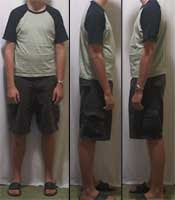 The X and Y chromosomes are known as the sex chromosomes, for the obvious reason that they determine the destination of human's gender. Simply, xx is for female and xy is for male. Everybody gets an X from his or her mother, but if you inherited y chromosome from your father you're male; if you inherited x from your father you're a female. Since men(XY) have no spare x chromosome, they are more likely to suffer recessive problems than women. Thus, haemophillia, colorblinndness and ilk are much more common in men's X. This simple predestination can also go wrong and causing aneuplody. Aneuplody (abnormal number) of chromosomes. XXY syndrome and named by the Massachuset founder Klinefelter, a genetic disorder that is giving the patient 47 chromosomes in total (46 for normal). Klinefelter's is a genetic disorder where the man has an extra x chromosome. Usually the patient has small testicle, low testosterone, tall and unpropotional body, and also teeth abnormalities. The disorder is the result of error that occured during the sperm forming during the meiosis Labels: aneuplody, biology, chromosomes, genes
|
|
|
Tuesday, April 20, 2010
HUMAN CLONING: TECHNIQUES
Cloning means copying Human cloning brings up myriad of controversies to the world, nowadays. More than just because it's dangerous, but some said it means playing god. Religious says cloning is taking reproduction out from the hands of God.An argument said that cloning may cause the next generation will be man-manufactured, and may causing the price of human will decreasingly drop because by cloning human will get used to treat others like to treat an object. Human cloning aka asexual reproduction can also causing the lack of diversity in human body. In scientist views, human cloning can lead us to be more understand about our species and can help us to find treatment for some incurable disease, e.g cancer or some genetic disorders. The human cloning technique that has succeed to Dolly the cloned sheep, the first mammal that cloned is called somatic cell nuclear technique which an egg cell taken from a donor has its nucleur removes and fused to one that has genetic material. Labels: biology, cloning, genes, genome, techniques
|
|
|
LOVE IS JUST ABOUT A CHEMICAL REACTION
What is love? Love is more than ‘a-butterfly-flutters-in-your stomach’ or ‘flying-to-the-sky’ feeling. It is more than a psychological event when your body holds a strong affection emotion. Have you ever wonder where do those feelings come from? Those ‘stomach-fluttering’ and sudden nervous are called infatuation. What is love? What does it do with infatuation? Why does it make you do foolish admiration? Love is complicated. It is something more than just an L-O-V-E. It is more than a feeling. It is also more than a verb. It is all about chemical reaction events on your body. people that fall in love is cannot control their brain. When we attracted to somebody, with an irresistible of chemicals, our brain makes us to fall in love. Psychologists have shown it takes between 90 seconds and 4 minutes to decide if a person fancies someone. There are many researches of love and its effects to our body. To make the observation easier, a Rutgers University scientist named Helen Fisher has divided the stages of love. Every stage has different hormone chemicals that produced in our brain. The stages are lust, attraction, and attachment. The hormones are serotonin, dopamine, estrogen, testosterone, oxytocin, and vasopressin. Each of them affects different part of brain too. LUSTLust is the first stage of love. According to howstuffworks.com, lust is also known as the desire of love. This experiment is common to be found when human reaches puberty. It plays important role in our life. According to an article by Lisa Diamond, lust and romantic love are two different things caused by different things. Lust evolved for the purpose of sexual mating, while romantic love evolved because of the need for infant/child bonding. Love relationships usually begin with a strong physical and emotional attraction that produces consciousness. Beside works based on estrogen and testosterone (sexual hormones that cause puberty in human development), the brain also saturated with a hormone called endorphin. According to innerworkspublishing.com, endorphin creates the feeling of pleasure that accompany love infatuation. The feeling is same with a person after they eat something pleasurable like chocolate and after they have a strong exercise. ATTRACTIONIf the relationship keeps continue, the next stage is attraction or romantic passion. In this stage, both the woman and man are reeling with romance and passion until they finally find out the true side of each person. The attraction stage can be felt when the person feels the heart is making more sense than his or her brain. “Love is blind” saying is really accurate in this stage. According to Ruth D. Kerce, attraction stage works both in emotion and physics. The physical area is when the body reacts to another’s. It affects the heartbeat systolic rate, temperature rises, palms get sweaty, stomachache, and the throat tightens. Usually, this is called the love symptoms. The emotion affects usually when the couple starts to give interest to each other and do some shares each other about their career, family, etc. It is usually happening when the couple doesn’t do physical activities. The feeling is also usually stronger than physical. According to youramazingbrain.com, scientists believe that attraction stage has three neurotransmitters involved. Neurotransmitter is a chemical that transmits a message between nerve cells in the brain. They are dopamine, adrenaline, and serotonin. Dopamine stimulates the rush of pleasure so it makes human become over-excited, adrenaline is increasing human heartbeat rate so it makes them sweat and asphyxiated, and serotonin which makes human can’t stop thinking about their lover in their head. In addition, norepinephrine also produced in this stage. It is similar to adrenaline which is producing bliss and excitement. ATTACHMENT If the couple keeps the strong feeling in attraction stage, they would move to the further stage which is called attachment. Attachment is usually when the couple chooses more serious relationship like marriage. There are two major hormones that have important roles in this stage. Oxytocin produced right on the climax of sexual orgasm during mating. It makes couples feel much closer to one another after they have had sex. It is also responsible for a mum’s breast automatically releasing milk. The important hormone is vasopressin aka anti-diuretic hormone and also produced after orgasm. It works with kidney to control thirst. According to people.howstuffworks.com, each hormone has its own section pathways in the brain. Serotonin flows through frontal lobe in human cerebrum, limbic (storage of memories and emotions, also in cerebrum), and majority in other parts of cerebrum while the norepinephrine flows through the cerebellum (small brain) and the serotonin flows through the hypothalamus which is the control center of all biological daily activities of the body. In conclusion…Human body is amazing. It has division of labor to manage each reaction for complicated chemical feeling, like love. It works in each particular pathways in brain marked that human body is able to manage the biological metabolism and other reaction in specific. The each part of human body has their roles in a purpose of something. Everything manages everything inside human body. Labels: biology, chemical, love, neurology, reaction
|
|
|
Sunday, April 18, 2010
Asthma and Genes
In every biochemical events in body, there are genes. If human body is a book, genes are just sentences of prose written over it. The entire of genetics complements is called genome. Matt Ridley, a British science editor, in his book Genome (1999) painted that if the genome is a book, there are twenty three chapters, called chromosomes. Each chapter contains stories, called genes. Each stories are made up of paragraphs called exons, which are interrupted by advertisements called introns. Each paragraph is made up of words, called codons. The letters of each word are called basses. Ridley whom wrote his book made up chapters that named after 23 chromosomes, exposed all information about each chromosome based on the number of chapter. In human body, the 23 chromosomes are made up by 22 autosomes and a pair of sex chromosomes (xx in female and xy in male). In size, the 22 pairs are numbered by the largest (number 1) to the smallest (number 22). The sex chromosome X is located between number 7 and number 8, while Y is the smallest. Genes are located in a chromosome. In each chromosome, there are 400-4000 genes. Genes are written in three bases or called as codon. The 4 bases are Guanine, Cytosine, Adenine, and Thymine. The bases are written on long chains of sugar and phosphate called DNA. During the replication, A likes to pair with T and G likes to pair with C. For instance, the sequence of ACGT becomes TGCA in the copy form. Besides the gene is able to do replication, it is also able doing translation. The translation starts with the transcription of the gene into a copy by RNA with the same base-pairing process except that it uses letter U for uracil to pair with T. Then a ribosome moves along the RNA copy (messenger RNA) translating each codon into twenty different amino acids. Later, the chain of amino acids forms a protein. In conclusion, every protein is a translated gene. Protein itself also responsible to switch gene on or off for being promoter and enhancer of a particular gene. Unfortunately, during replication mistakes are sometimes made. This is known as mutation. Although genes are small and tiny, this doesn’t mean genes are unimportant. If an error happens in a gene, this may caused flaw in body system. For example, when chromosome 3 is broken it caused a metabolic anomaly disease named alkaptonuria, or like the most famous genetic disease Huntington’s happens because of chromosome 4 mutation and when there is a complete lack in chromosome 4 it may causes rare Wolf-Hirscchorn syndrome, the chromosome 6 if it is broken can cause the problem of human intelligence. In genetic disorder, there is no 50-50 probability you get it or not. You either have mutations, in which case you get these genetic diseases, or you don’t. But, the genetic doesn’t always work in that digital way. Sometimes, it depends on environment too. Like the case of asthma. There are 15 ‘asthma genes’ in all chromosomes (8 genes in chromosome 5, 2 each in chromosome 6 and 12, and 1 each in chromosome 11, 13, and 14). These genes are producing immunoglobulin E aka IgE. According to medterms.com, IgE acts as antibody in our body by eliciting allergen (allergic mucous). Most asthmatics are allergic to something. Asthma, eczema, allergy, and anaphylaxis are syndrome that triggered by IgE. So, that’s why allergic person has asphyxia. Asthma itself is a chronic inflammation in bronchial tube and causing the tightening of the windpipe. How does it correlate with chromosome 5? ADRB 2 lies along in chromosome 5 and it responsible to produce beta-2-adrenergic-receptor which controls the bronchodilation and bronchoconstriction that cause the tightening in bronchus or windpipe. According to American Lung Association, feather, pollen, vigorous exercise, dust mites are the most common asthma triggers. No matter what triggers a person to have asthma, his or her asthma syndrome still triggered by IgE. Sources: Ridley, Matt. 1999. Genome. USA: Harper Collins. Medterms.com Wibowo, Daniel . 2005. Anatomi Tubuh Manusia. Jakarta: Gramedia. Labels: asthma, biology, chemical, chromosomes, genes, genome
|
|
|